DOE, Missouri and Mizzou Break Ground on Radioisotope Science Center to Expand U.S. Isotope Supply
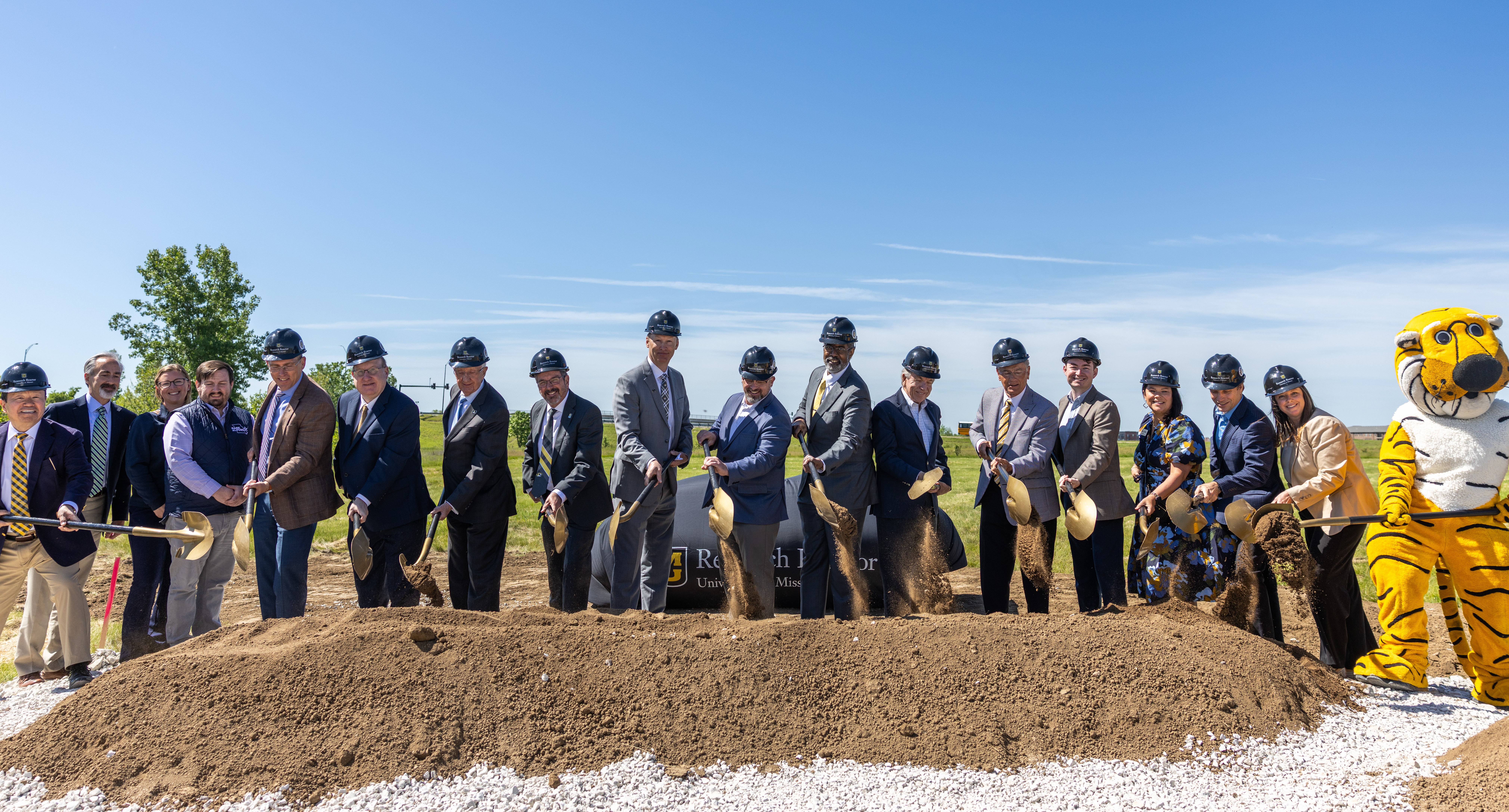
Leaders, partners, and supporters break ground on the future Radioisotope Science Center (RSC) at the University of Missouri Research Reactor (MURR), marking a major milestone in expanding domestic radioisotope production and advancing nuclear medicine research.
The next generation of cancer therapies, national security technologies and scientific discoveries will depend on materials measured in tiny quantities but carry enormous national importance: radioisotopes.
Last week, the University of Missouri broke ground on the Radioisotope Science Center (RSC), a new state-of-the-art, approximately 31,250-square-foot facility supported through a $20 million award from the U.S. Department of Energy’s Office of Isotope R&D and Production (IRP), within the Office of Science, matched by a $20 million investment from the State of Missouri.
Expected to be completed in 2028, this facility is designed to expand America’s ability to deliver a reliable U.S.-based supply of strategic radioisotopes that will enable translational research for clinical applications, enhance U.S. competitiveness in nuclear medicine, and support key advances in scientific research and industrial technologies. The RSC represents a strategic expansion of the long-standing partnership between DOE and Mizzou and reinforces the nation’s commitment to secure, resilient, and innovative domestic isotope production capabilities.
“Radioisotopes are essential to modern medicine, national security and scientific discovery, but the nation’s ability to use them depends on a strong and reliable domestic supply,” said Christopher Landers, Director of the DOE Office of Isotope R&D and Production. “This new center brings together DOE, Missouri and Mizzou to build the capabilities, workforce and innovation pipeline needed to deliver extraordinary impact for the Nation.”
In addition to expanding isotope production capacity, the RSC will serve as a national hub for workforce development in nuclear science and radiochemistry, helping educate and train the next generation of scientists, engineers, and technical professionals needed to sustain U.S. leadership in isotope science and production.
“Today’s groundbreaking represents a transformative step forward for our university, our state and the nation,” University of Missouri President Mun Choi said. “The Radioisotope Science Center will accelerate discovery, expand lifesaving treatments and further establish Mizzou as a global leader in nuclear science and medicine.”
The RSC will leverage the extensive expertise and infrastructure of the University of Missouri Research Reactor (MURR), one of the nation’s premier university research reactors and a key contributor to domestic isotope production. The facility will support research, development, and processing of radioisotopes produced at MURR and DOE reactor facilities, with distribution coordinated through DOE IRP’s National Isotope Development Center to support research institutions, industry, and commercial applications nationwide.
“The RSC combines the expertise of Mizzou and the DOE IRP and will strengthen the nation’s supply of critical radioisotopes,” said Matt Sanford, Executive Director of MURR. “We are excited about the innovative building design, which incorporates both organizations’ decades of experience in radioisotope development and production.”
The groundbreaking marks another major step in DOE IRP’s broader mission to stabilize the U.S. isotope market, secure domestic independence in isotope supply, and position the United States as the global leader in isotope science and production. Through strategic partnerships with national laboratories, universities, industry, and states, DOE IRP continues to strengthen the nation’s isotope ecosystem and reduce reliance on foreign supply chains for critical isotopes.